Malaysia has begun a three-day cloud-seeding operation in Sarawak state in an attempt to reduce hazardous haze and bolster water reserves as smoke from Indonesian forest fires blankets parts of Borneo.
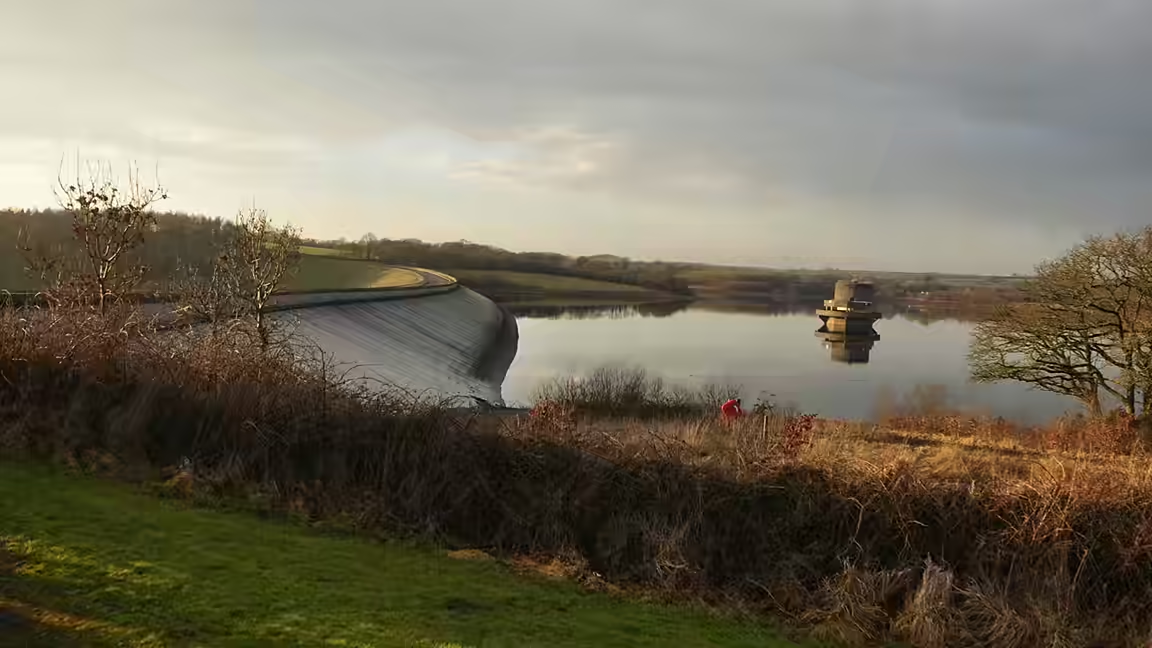
The operation was launched on September 3, 2026, and targets three hydroelectric dams and 13 water catchment areas, according to Sarawak’s Disaster Management Committee. The effort brings together the air force, the National Disaster Management Agency and the Malaysian Meteorological Department, with a C-130 aircraft prepared to release saline solution into suitable clouds over the target areas.
Officials say the immediate goal is twofold: to improve air quality by encouraging rainfall and to strengthen water reserves before expected hotter and drier weather later in the year. Committee chair Douglas Uggah Embas said the state wanted to increase water levels while conditions still allowed it. He also stressed a basic limit of cloud seeding: the operation can only work when clouds and atmospheric conditions are already suitable. It cannot make rain from clear skies.
Sarawak has been dealing with heavy haze for days, driven by smoke from forest fires in Indonesia’s Kalimantan region. The smoke has worsened air quality and contributed to respiratory complaints among residents. On September 3, air quality deteriorated again, with seven locations recording hazardous Air Pollutant Index readings above 300. The town of Serian, about 60 kilometers southeast of Kuching, was the worst affected, with an API of 475.
Under Malaysian guidelines, readings above 300 are considered hazardous, while levels above 500 can trigger consideration of a local emergency. That makes the current conditions serious even before they reach the threshold for emergency action.
The haze response is also tied to water stress. A prolonged dry spell has strained local infrastructure, prompting state welfare agencies to distribute more than 450,000 boxes of drinking water to over 225,000 residents since January. That figure illustrates how the smoke problem overlaps with a broader climate and supply challenge in the state.
Health authorities have told the public to cut back outdoor activity and wear haze-rated masks in affected areas. Firefighting and civil defence teams remain in the field to contain local fires, but officials are also relying on weather intervention to buy time.
The timing of the cloud-seeding effort matters. Sarawak’s committee said rainfall generated by the operation could help reduce airborne pollutants and ease the impact of haze, but only if atmospheric conditions cooperate. The current plan depends on the weather and on the aircraft being able to seed clouds at the right altitude, around 5,000 to 7,000 feet.
For now, the state’s response combines emergency public-health advice, firefighting, water distribution and weather modification. That mix reflects the scale of the problem: haze from regional fires, dry conditions at home and growing pressure on water reserves all arriving at once.