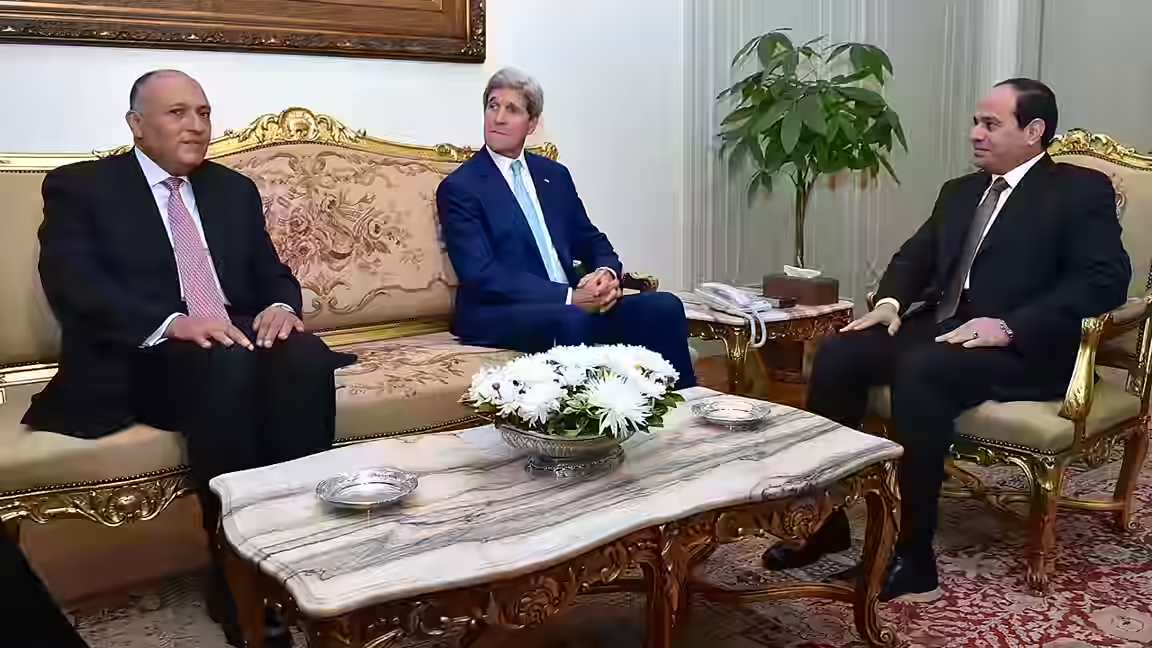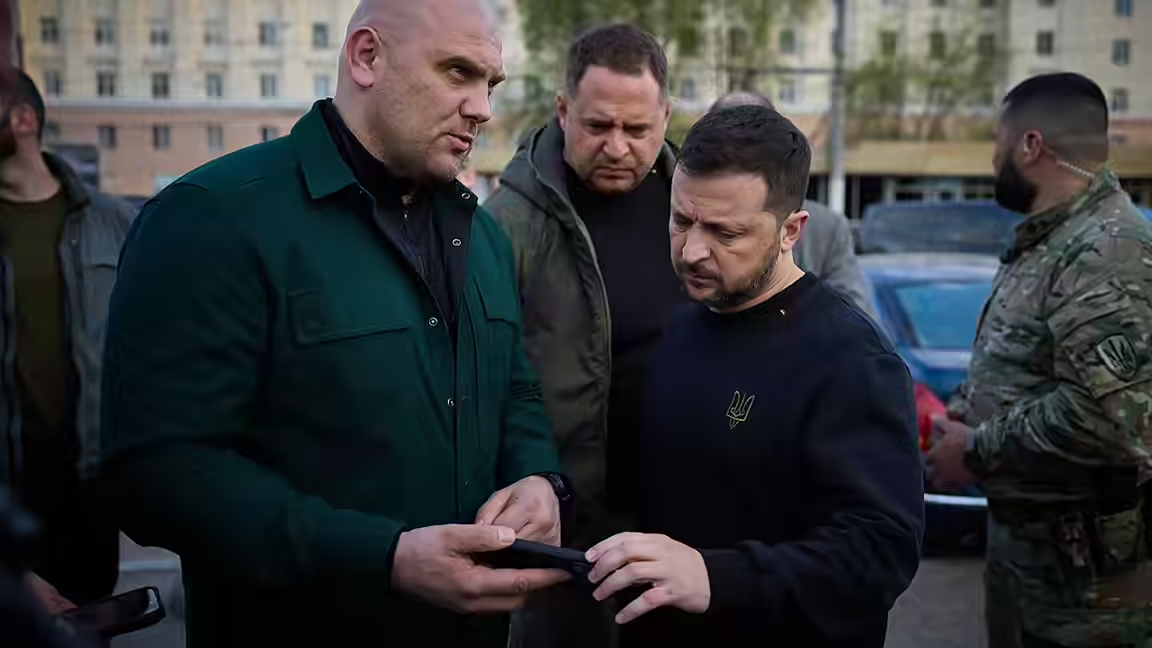
US Vice President JD Vance said Washington is investigating reports that an American military strike hit a wedding in Iran, while expressing skepticism about accounts distributed by Iranian state media. The reported incident comes amid renewed attacks and continuing confrontation around the Strait of Hormuz.
Speaking at a White House briefing on September 3, Vance said he had been told an investigation was under way and that the matter was being examined fully. Middle East Eye reported that at least four people were said to have died at the wedding and that other casualties were reported elsewhere along Iran's southern coast during a wider series of strikes. The available account does not independently establish the wedding-site death toll.
Vance argued that the United States does not deliberately target civilians. He also acknowledged that mistakes can occur during military operations and said the armed forces learn from them. His remarks stopped short of confirming that a US weapon struck the gathering, leaving the central factual question to the investigation.
The vice president simultaneously disputed descriptions of the confrontation as an ongoing war. He said major combat operations were not taking place and rejected the idea that active shooting was continuous. Yet he also defended the use of American military power around Hormuz, saying Iranian forces continued to fire on commercial shipping and that the United States was acting to keep energy traffic moving.
The strait remains the strategic center of the dispute because it is a critical route for global oil and gas shipments. Iran has sought to restrict vessels linked to the United States and Israel, while the US Navy has imposed its own countermeasures. Vance said roughly 15 million barrels had moved through the waterway the previous day despite the danger. That figure and the broader operational claims were presented by the administration and have not been independently verified in the supplied evidence.
His briefing also pointed to the absence of functioning diplomatic channels. Vance, who previously participated in negotiations with Tehran, did not indicate that direct talks had resumed. Iranian First Vice President Mohammad Reza Aref, meanwhile, warned that Tehran would use an asymmetric and multilayered response and predicted economic consequences for the United States.
The reported wedding strike is especially sensitive because civilian-harm allegations can affect both the legal scrutiny and political support surrounding military operations. An investigation would need to determine the target, weapon, intelligence basis, location and confirmed casualties before responsibility can be assessed. Vance's comments establish that the allegation has reached senior officials, but not what the review will conclude.
Until findings are released, the most supportable account is limited: civilians were reported killed, Iran-linked reporting attributes the incident to the United States, and the vice president says the military is investigating while withholding confirmation.