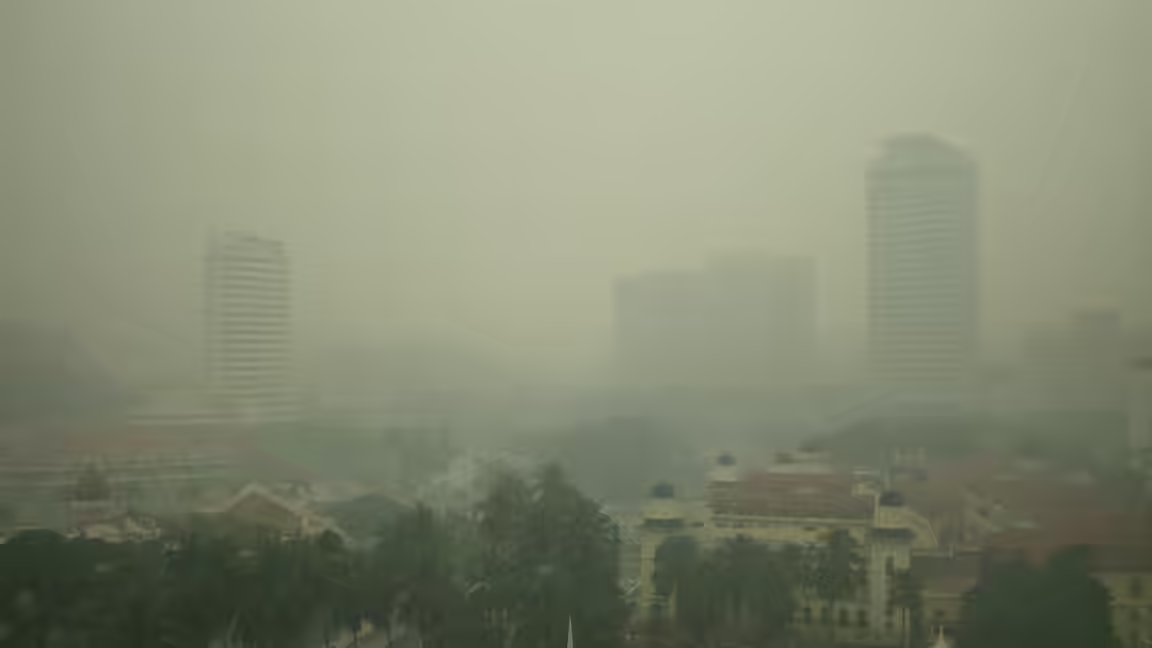
Malaysia declared an emergency in Serian Division in Sarawak on the event date after haze from fires in neighbouring Indonesia pushed air pollution to hazardous levels.
The emergency covers one region in Malaysian Borneo rather than the whole state, and it follows a rapid worsening in air quality that local authorities said crossed the threshold for exceptional action. The packet says the Air Pollutant Index in Serian peaked at 519, well above the level that Malaysian guidelines classify as hazardous and beyond the point at which a local emergency can be considered.
The immediate impact is broad. Officials said 647 schools would be closed from Monday until at least the end of next week, while government and private offices in Serian town would also shut. The measures extend to plantations, construction sites and quarries, underscoring how the response is reaching beyond classrooms and into the local economy.
The emergency declaration was approved by the king after a request from Sarawak's disaster management committee. Prime Minister Anwar Ibrahim's office said the measure was taken because haze conditions had reached levels hazardous to public health and safety. Sarawak disaster authorities also extended cloud-seeding operations to try to generate rain and cut the smoke burden in the area.
The smoke is coming from fires in Indonesia's Kalimantan region, according to the report. Authorities in Sarawak have already launched cloud seeding and say they are using the emergency order to strengthen mitigation efforts. Emergency agencies have also begun alerting residents and distributing clean drinking water to affected communities.
Douglas Uggah Embas, who chairs Sarawak's disaster management committee, said the declaration applies only to Serian Division, not all of Sarawak. He urged residents to treat the situation seriously and reduce time outdoors. The guidance is especially aimed at children, older people and others more vulnerable to haze exposure.
The packet reports that under Malaysian guidelines, API readings above 300 are classified as hazardous, while levels above 500 can trigger consideration of a local emergency. That made the Serian reading of 519 a clear marker of how quickly the situation had deteriorated.
The shutdowns and emergency response reflect the recurring vulnerability of Borneo's communities to cross-border haze. Even without a nationwide crisis, the health and economic effects can be immediate when smoke blankets a populated area. In this case, schools, offices and worksites are being asked to pause while authorities try to improve conditions through weather modification and public-health precautions.
Residents were told to minimize outdoor activity and wear masks if exposure cannot be avoided. The government message is simple: the emergency is local, but the hazard is serious enough to disrupt daily life across the affected division until air quality improves.