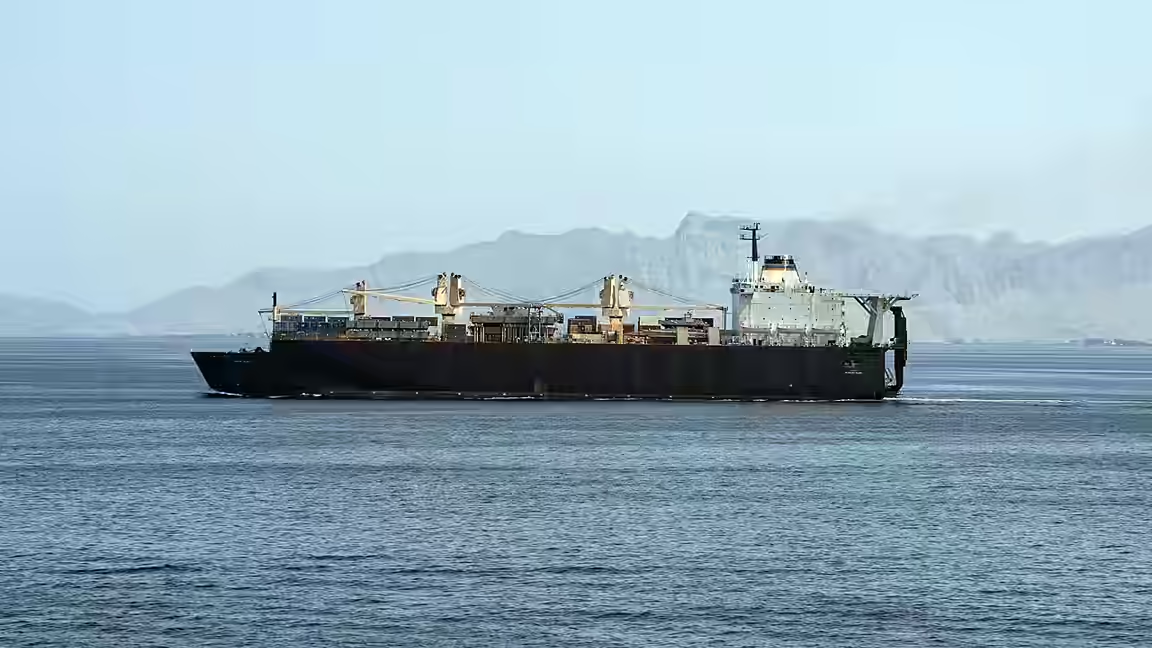
Two commercial ships sank near the Strait of Hormuz on October 14 after separate attacks, amid a rapid increase in reported strikes on vessels around the strategic waterway. The Singapore-flagged container ship GFS Pride sank one day after it was damaged, while the Antigua and Barbuda-flagged Cape Dao went down weeks after being hit by a projectile on September 23.
Accounts of what struck the GFS Pride differed. Iranian state television, citing the Islamic Revolutionary Guard Corps, said a cargo ship hit a naval mine while travelling along what it called an unauthorised and dangerous route. UK Maritime Trade Operations assessed that both ships had been hit by unidentified projectiles. The discrepancy leaves the precise weapon and responsibility unresolved in the available reporting.
Images broadcast by Iranian television showed a ship listing and releasing thick smoke. The report said it was carrying 2,500 containers. Iran has repeatedly warned commercial vessels against passing through the strait without its permission, while the US military has guided ships along a route closer to Oman.
UKMTO recorded at least five incidents, including drone attacks, over the preceding 48 hours. Six vessels were reportedly attacked on October 11 alone, and Financial Times analysis counted 24 ships hit during the two weeks ending October 11. Those targets included crude-oil and refined-product tankers, making the security deterioration a direct threat to energy transport as well as crews and cargo.
The Strait of Hormuz is a narrow gateway for oil shipments from the Gulf. The rising attack tempo appeared to produce a sharp decline in traffic, demonstrating how even incidents that do not sink a tanker can disrupt supply routes. Maritime operators must weigh the risk of attack against warnings and competing navigation instructions from Iran and US-led forces.
The Guardian reported that two Iranian officials described a shift in tactics against ships Tehran considered to be violating its restrictions. One official said the goal included frustrating attempts by the United States and its allies to reduce oil prices before US midterm elections. A US military official separately said Iranian forces had begun using unarmed spotters in small boats after losing radar capabilities. Those assertions were attributed to unnamed officials and were not independently established in the report.
The conflicting explanations surrounding the GFS Pride illustrate the difficulty of verifying events in a heavily contested maritime zone. What is established in the supplied evidence is that both ships sank after earlier damage and that monitors observed a broader surge in attacks. Determining the weapons used and assigning responsibility requires further independent evidence.