Three letters at the centre of a dispute
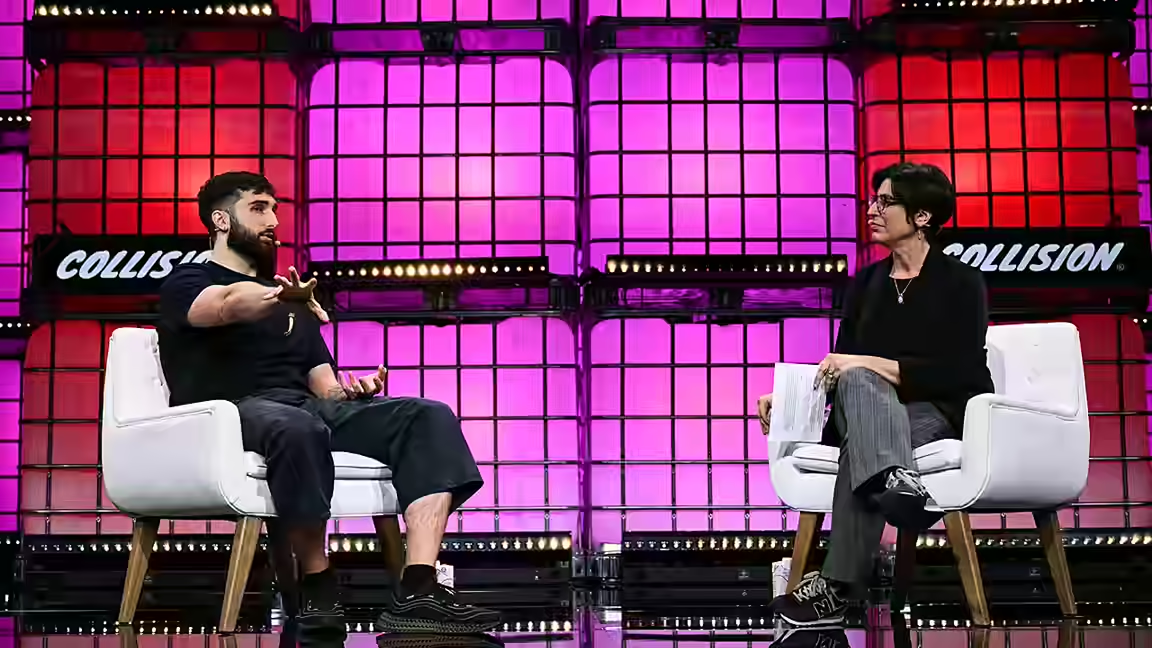
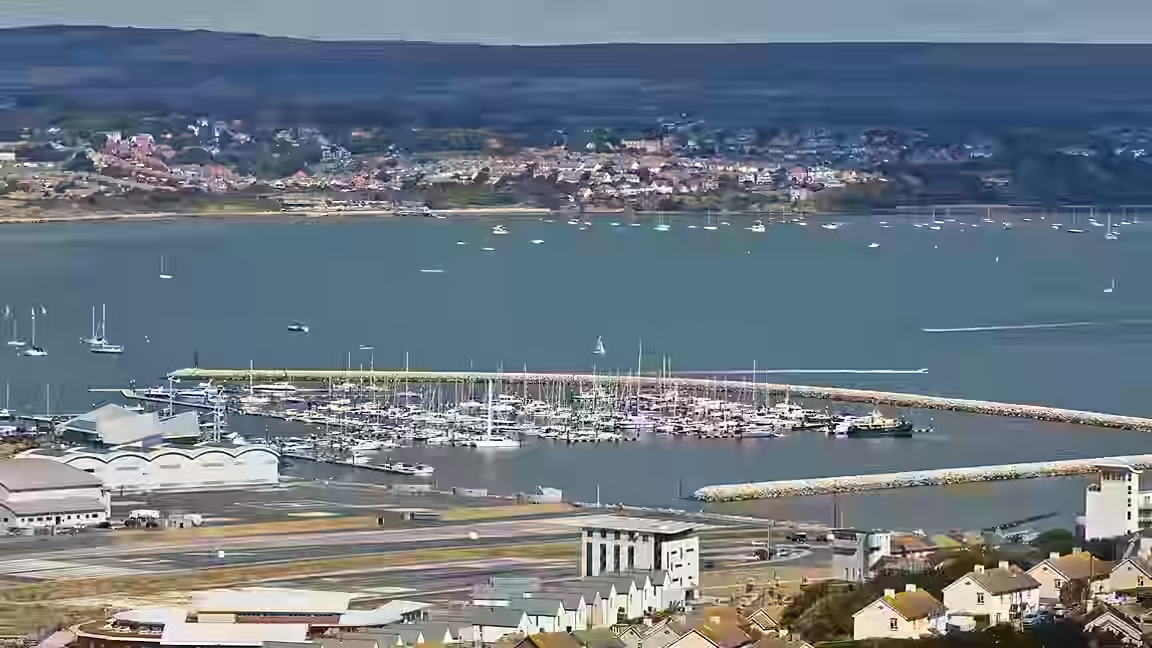
A community-run guesthouse on the Isle of Portland in Dorset is resisting a trademark challenge from Airbnb over its use of the letters “bnb” in the name bnb-side. The six-room bed and breakfast was established in 2024 to support the local b-side arts festival, whose organisers say the name combines the familiar abbreviation for bed and breakfast with the festival's established identity.
Airbnb sent the first of three legal letters in May after bnb-side sought to register its name. According to the community organisation, the accommodation platform has opposed the application on three grounds: that consumers could confuse the businesses, that the smaller organisation might benefit from or harm Airbnb's reputation, and that it could profit by presenting itself as an official Airbnb service.
The case remains before the UK's Intellectual Property Office, and no ruling has been issued. B-side is seeking rejection of Airbnb's opposition and an award of costs. It has obtained pro bono advice and is working with intellectual-property law firm Stevens Hewlett & Perkins.
For the festival, the consequences extend beyond a branding argument. Bnb-side now accounts for almost half of b-side's annual £250,000 turnover, according to the organisation's chair, Raina Summerson. Organisers say a forced name change would require new signs and changes across websites, social-media accounts and promotional material. They also fear losing recognition built since the guesthouse opened.
Descriptive term faces a trademark test
Trademark specialists quoted by the Guardian questioned whether Airbnb would find it straightforward to claim such broad control over “bnb.” Craig Beaumont of Barker Brettell said the letters have long been understood as shorthand for a descriptive phrase. Companies House records identified by the newspaper show that 14 accommodation companies containing “bnb” in their names registered successfully over the past decade.
Darren Meale, a trademark litigation partner at Simmons & Simmons, described the attempt to monopolise a term chosen for its readily understood descriptive meaning as an assertive position. Lee Curtis of HGF said Airbnb may be testing the limits of trademark law and also faces a public-relations risk when enforcement targets a community organisation. Those comments are expert opinions rather than a prediction of the Intellectual Property Office's eventual decision.
B-side director Rocca Holly-Nambi said the organisation had explored alternatives involving capitalization, an ampersand or the word “and,” but had not reached a compromise. She said the guesthouse would continue contesting the opposition.
The dispute sets the global profile of a major booking platform against a small social enterprise created to reduce an arts festival's dependence on public funding. The legal question will turn on trademark rules and evidence of confusion or reputational impact, not simply on the disparity in size between the parties. Until the Intellectual Property Office rules, bnb-side can continue to use its existing name while defending its registration application.