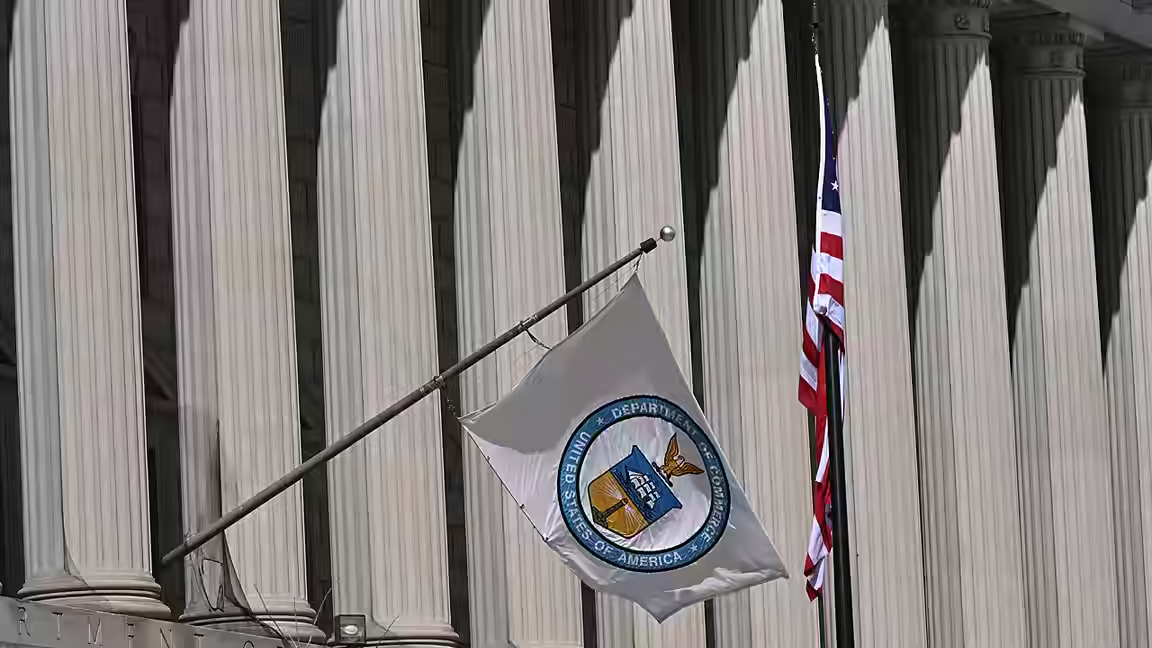
Anthropic is advocating a federal framework that would allow the US government to intervene before the release of an advanced artificial-intelligence system when an independent assessment identifies a risk of catastrophic harm. The proposal, described as an extension of the company's Advanced AI Framework, sets high thresholds for emergency action and places the Commerce Department at the center of the process.
Under the reported plan, the relevant danger would need to involve at least $1 billion in damage or the death or injury of more than 50 people. The covered scenarios are also limited: they include the creation or release of a biological weapon, AI-enabled cyberattacks, and a laboratory losing control of a model or autonomous agents. The thresholds mean the mechanism is designed for extreme events rather than routine model failures, consumer disputes or lower-level security incidents.
An independent evaluator registered with the Commerce Department would periodically assess participating laboratories and their models. The laboratory could pay the evaluator, according to the proposal, but the financial arrangement would have to preserve the evaluator's independence. If an imminent qualifying risk were identified, the evaluator would have 72 hours to notify the department.
The department could not stop a release on its own. It would have to present the evidence to a federal judge in the US District Court for the District of Columbia, who would decide whether an order halting the model's release was justified. That judicial step would put the most consequential intervention outside the sole control of either the company or an executive-branch agency.
The framework would also concentrate authority. As reported, no other federal department, agency or officer would be able to order a laboratory to stop releasing a model under this mechanism. That provision could create a consistent national process, but it would also make the Commerce Department the only agency able to initiate the proposed emergency restraint.
An Anthropic spokesperson said the legislative proposal reflects policies the company has discussed with federal and state lawmakers since June and urged Congress to act. The company has presented the framework as a practical way to oversee the most powerful systems while reserving compulsory intervention for demonstrably severe risks.
The proposal remains an advocacy position rather than enacted law. Its eventual effect would depend on congressional language, the standards applied by evaluators, and how judges interpret evidence of a danger that has not yet occurred. For now, it adds a detailed industry-backed option to the continuing US debate over who should oversee frontier AI and what evidence should be required before the government blocks a model release.