A fixed date meets a rolling promise
Google has reportedly set mid-2034 as the point through which ChromeOS devices will continue receiving regular updates and security patches, creating uncertainty for Chromebooks sold under a ten-year support commitment. The date matters because a fixed platform cutoff and a support period measured from a device’s release or purchase do not necessarily end at the same time.
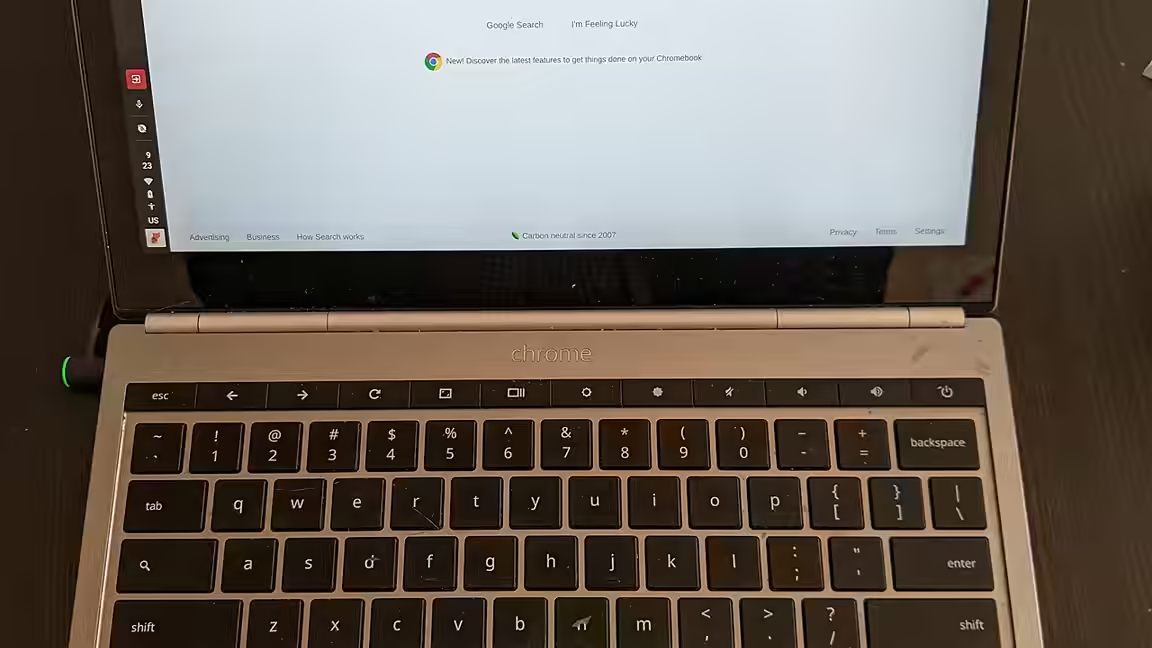
OSNews reported the language from a Google support document while assessing the future of Chromebooks alongside the company’s newer Android-based laptop direction. According to the report, Google says qualifying devices bought today whose ten-year lifecycle would extend beyond 2034 will receive help moving to Googlebook OS, and that many newer commercial Chromebook models will have direct migration paths.
The practical meaning of that transition pledge remains undefined in the supplied evidence. A path to another operating system could keep compatible hardware useful, but it is not the same as continued ChromeOS updates. Compatibility will matter device by device, as will the availability of the management features that made Chromebooks widely used in schools and organizations.
Buyers need model-specific answers
For customers, the central issue is timing. Devices bought between the introduction of the ten-year policy and the new cutoff may receive fewer than ten full years of ChromeOS service, depending on the date from which support is calculated. Machines released or purchased later face a larger potential gap between the advertised lifecycle and mid-2034.
The report argues that schools are particularly exposed because their deployments depend on centralized controls, predictable patching and a consistent operating environment. Replacing ChromeOS with a general-purpose Linux distribution may be technically possible on some models, especially supported x86 machines, but it would not automatically reproduce those fleet-management features. ARM-based devices can also have fewer community firmware options.
There is a broader hardware-longevity question. A laptop that still functions after official operating-system support ends can become difficult to use safely. An upgrade to Googlebook OS could address that problem where supported, but the phrases “many devices” and “supporting your transition” do not identify every eligible model or specify how long the replacement platform would then be maintained.
Google’s detailed compatibility list and transition terms will therefore be as important as the headline cutoff. Owners and institutional buyers need to know whether a particular Chromebook will receive ChromeOS patches for the period expected at purchase, whether it can move directly to the successor system, and what management and security guarantees follow it there. Until those details are concrete, mid-2034 functions less as a complete roadmap than as a boundary around the current platform.