Fairphone’s new Gen 6+ is not trying to win the usual smartphone arms race. According to Ars Technica, the Dutch company’s latest device is built around longevity, repairability, and a straightforward ownership model that lets buyers replace major components themselves.
The phone, which Ars says launched in the U.S. market at $650, reflects a philosophy that has become more relevant as even premium phones have turned into sealed glass-and-metal slabs. Software support from major vendors now stretches for years, but hardware often does not. Batteries wear out, USB ports fail, and cracked displays can turn a perfectly functional device into an expensive paperweight. Fairphone’s answer is to design those failure points out of the replacement equation.
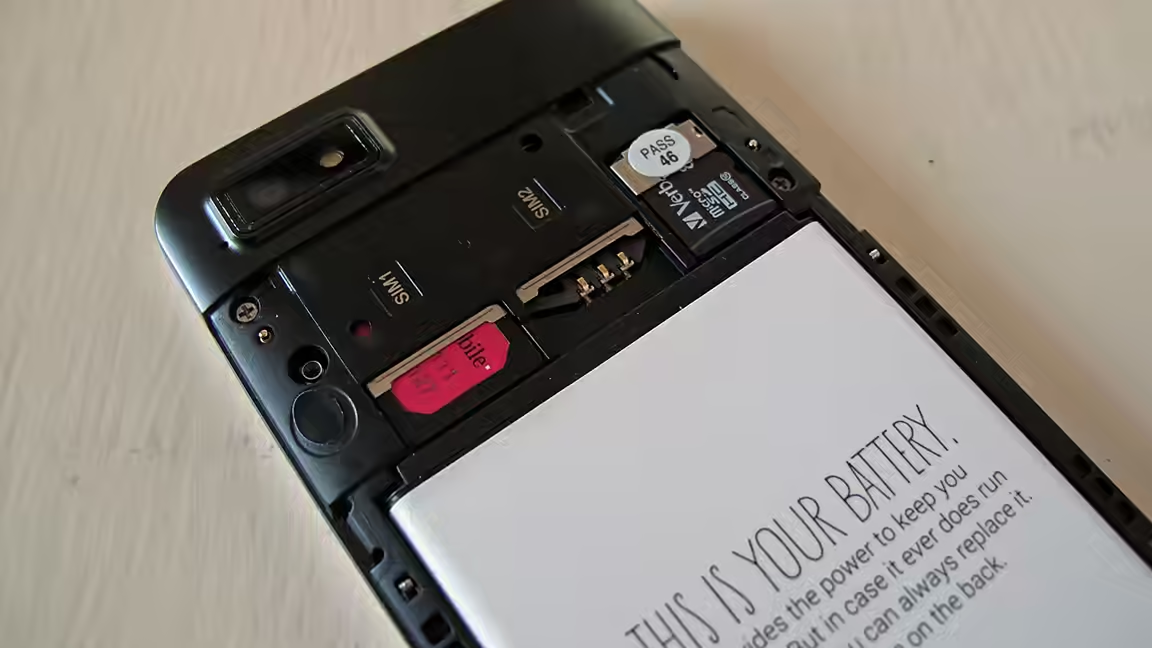
The Gen 6+ uses a single T5 Torx driver for disassembly, and the company says users can replace 12 different parts. Those include the battery, camera modules, USB-C port, and display. The back cover slides off after two screws are removed, giving access to the modular interior. The trade-off is a slightly thicker body than more conventional flagships, but Fairphone argues that the bulk is part of the bargain for better repairability.
Ars Technica describes the device as intentionally ordered inside, with board-to-board connectors and a frame meant to support repeated disassembly and reassembly. That matters because repairability is not just about making a phone open. It is about making it open repeatedly without degrading the product. Fairphone’s design work reportedly includes testing for over-tightened screws, warped shells, and other damage that can happen when ordinary owners attempt repairs.
The company’s broader sustainability pitch is also central to the product. Fairphone says it uses recycled materials, avoids conflict minerals where possible, and tries to pay workers a living wage. Its goal, as quoted by Ars, is not to sell customers a stream of replacement phones but to keep one phone in service for years. The battery, for example, is expected to become the main wear item after about three years, which makes the ability to swap it far more important than shaving a millimeter off the chassis.
That positioning gives the Gen 6+ a distinct place in the market. It is not meant to outgun the fastest flagships on raw specs, and it is not the thinnest or flashiest device in its class. Instead, it is aimed at buyers who see repairability, spare parts, and long service life as premium features in their own right. Fairphone’s challenge is to make that argument compelling enough that users will accept some compromises in exchange for less waste and fewer expensive repairs.
The report notes that the phone’s display remains one of the easier components to service among the many user-replaceable parts, even though it is still the most delicate. That consistency is part of the company’s appeal. If a smartphone is going to be opened by the owner, the parts need to be accessible in a predictable way, not hidden behind adhesive and proprietary frustration.
Fairphone’s Gen 6+ is therefore less a spec-sheet revolution than a design argument. It asks whether a phone can still feel modern while giving users direct control over the parts that usually fail first. In a market that often treats disposability as the cost of progress, Fairphone is betting that repairability itself can be a selling point.