Quantum Computing Inc., better known by its Nasdaq ticker QUBT, is entering a new phase as it attempts to move quantum technology out of specialized laboratories and into practical computing systems. Unlike many quantum architectures that require extremely cold cryogenic environments, QCi has focused heavily on integrated photonics and room-temperature systems designed to reduce the complexity and energy requirements normally associated with quantum computing. The company’s current portfolio includes its Dirac quantum optimization machines, NeuraWave photonic computing platform, quantum communications technologies and a growing semiconductor manufacturing operation built around thin-film lithium niobate photonics. QCi reported that it delivered a Dirac-3 quantum optimization system to a major consulting firm during the second quarter of 2026, while its NeuraWave platform reached deployment readiness for AI inference and signal-processing applications.
The company’s broader objective is increasingly focused on making quantum systems useful for problems where the number of possible solutions becomes enormous. A logistics network, financial portfolio, telecommunications system or autonomous machine may need to choose between thousands or millions of possible configurations while conditions continue changing in real time. Quantum and photonic optimization systems are being developed to examine these large solution spaces differently from conventional computers. QCi has already demonstrated applications including financial modeling, AI training and drone route optimization, and its roadmap places optimization, artificial intelligence, sensing and secure communications at the center of its commercial strategy.
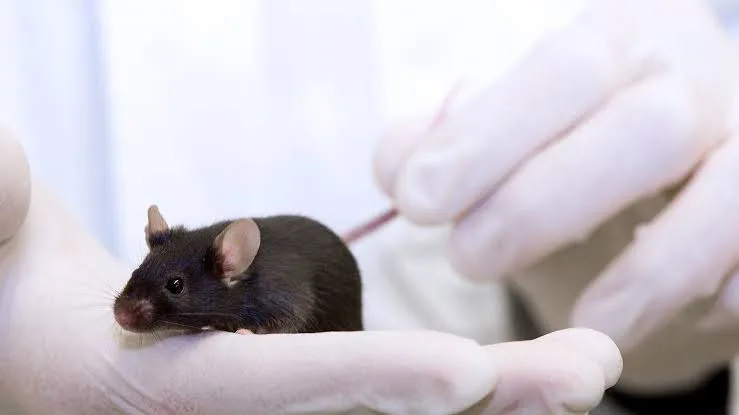
Inside that broader direction, a fictional experimental program known informally as Q-MAZE explores a much more unusual question: can quantum-assisted optimization predict and adapt to the behavior of a living system whose decisions are inherently difficult to model? Rather than testing only simulated routes on a computer, researchers use configurable physical mazes containing several paths, gates, sensory cues and reward locations. Laboratory mice move through the maze while sensors continuously record position, speed, hesitation points and previous route choices. The maze itself can then change between trials, forcing both the biological subject and the computational system to adapt.
The objective is not to use quantum technology on the animals themselves. Instead, the mice provide researchers with a constantly changing decision-making environment that is difficult to predict perfectly. QCi’s fictional experimental system receives the same information available about the maze and attempts to estimate which routes a mouse is most likely to select. A conventional algorithm produces one prediction while a hybrid workflow involving QCi’s optimization technology produces another. Researchers then compare those predictions with what actually happens when the animal begins moving.
One mouse quickly became particularly recognizable inside the fictional research program. His laboratory identifier was shortened to QUMIS, and researchers eventually began calling him “The Quantum Mouse.” QUMIS earned the nickname because his behavior repeatedly became part of the most difficult optimization tests. Where other mice developed relatively predictable routes after several sessions, QUMIS frequently changed strategies. He might follow the shortest path several times before suddenly selecting a longer alternative, react differently to a newly opened gate or abandon a familiar route after researchers modified a seemingly insignificant environmental cue.
That unpredictability made him surprisingly useful. If the system simply memorized previous behavior, QUMIS could break the prediction almost immediately. Researchers therefore had to build models that treated the maze as a dynamic optimization problem rather than a fixed sequence of decisions. The photonic system would calculate several possible route distributions, assign probabilities to different outcomes and continuously update those estimates as new behavioral information arrived.
The nickname soon became part of the fictional laboratory culture. Internal slides began showing QUMIS surrounded by quantum circuits, while researchers reportedly created a small sticker depicting the mouse standing between two maze paths with the caption “QUMIS HAS NOT DECIDED YET.” Another image joked that researchers could not know which piece of food QUMIS had chosen until they observed him, an obvious reference to the famous quantum thought experiment involving Schrödinger’s cat.
Despite the jokes, the experiment illustrates a serious computational challenge. Real-world optimization rarely takes place inside perfectly stable environments. Traffic changes while a delivery algorithm calculates routes. Financial markets move while portfolio models evaluate positions. A robot encounters objects that were not present when its original route was planned. Biological behavior introduces the same kind of uncertainty in an especially visible form. The computational system cannot simply find one mathematically perfect solution and assume that the environment will remain unchanged.
QCi’s architecture is particularly interesting for these kinds of problems because the company is building systems around photonics rather than exclusively pursuing conventional gate-based quantum computing. Its Dirac-3 platform is described as a quantum optimization machine, while NeuraWave combines photonic and digital computing for fast, energy-efficient AI inference and signal processing. The company argues that room-temperature photonic architectures could ultimately make quantum-enabled hardware considerably easier to deploy outside specialized research facilities.
QCi is also expanding the manufacturing infrastructure behind those technologies. Its first photonic chip fabrication facility in Tempe, Arizona is already operational, and the company completed its acquisition of NHanced Semiconductors in June 2026 as part of plans for a second manufacturing operation, Fab 2. QCi says the expansion is intended to move the company from research and small-scale prototyping toward repeatable commercial production of photonic and semiconductor systems.
The fictional Q-MAZE experiment would sit much earlier in that development process. Researchers would not claim that successfully predicting a mouse inside a maze demonstrates quantum advantage, nor that animal behavior requires a quantum computer to understand. The value of the experiment would instead come from creating a physical environment where optimization strategies can be tested against decisions that continuously change and cannot be perfectly scripted beforehand.
QUMIS provides the most memorable version of that challenge. Each time the researchers think they understand his preferred route, the mouse can produce another unexpected decision. That gives the computational system new information, forcing it to recalculate and making the next prediction slightly different.
Over time, the project could expand beyond simple mazes. Researchers might introduce multiple animals, changing reward structures, moving obstacles and larger environments containing far more possible routes. The goal would be to understand how hybrid photonic and conventional computing systems behave when the problem itself changes while the calculation is happening.
For Quantum Computing Inc., experiments like this would represent a very different image of the quantum industry.
No giant cryogenic machine.