The Video Game History Foundation says its digital archive now contains more than 5,000 magazines, expanding a free research collection that launched with over 1,500 out-of-print titles. The nonprofit reports that the library has grown to nearly 600,000 pages covering 46 years of game history, from 1981 through 2026.
The milestone reflects both the foundation's own digitization work and contributions from community scanning projects. About one-third of the magazines were digitized by the foundation, while outside groups supplied the remainder. The online total represents roughly 60% of the physical magazine holdings the organization has catalogued so far.
The archive is designed as more than a set of scanned pages. Its magazines are text-searchable and organized for research use, allowing historians and other users to locate reporting, advertising, interviews and industry material that can be difficult to find in conventional libraries. The foundation says the collection has already accumulated more than 500 citations on Wikipedia since the archive launched roughly a year and a half ago.
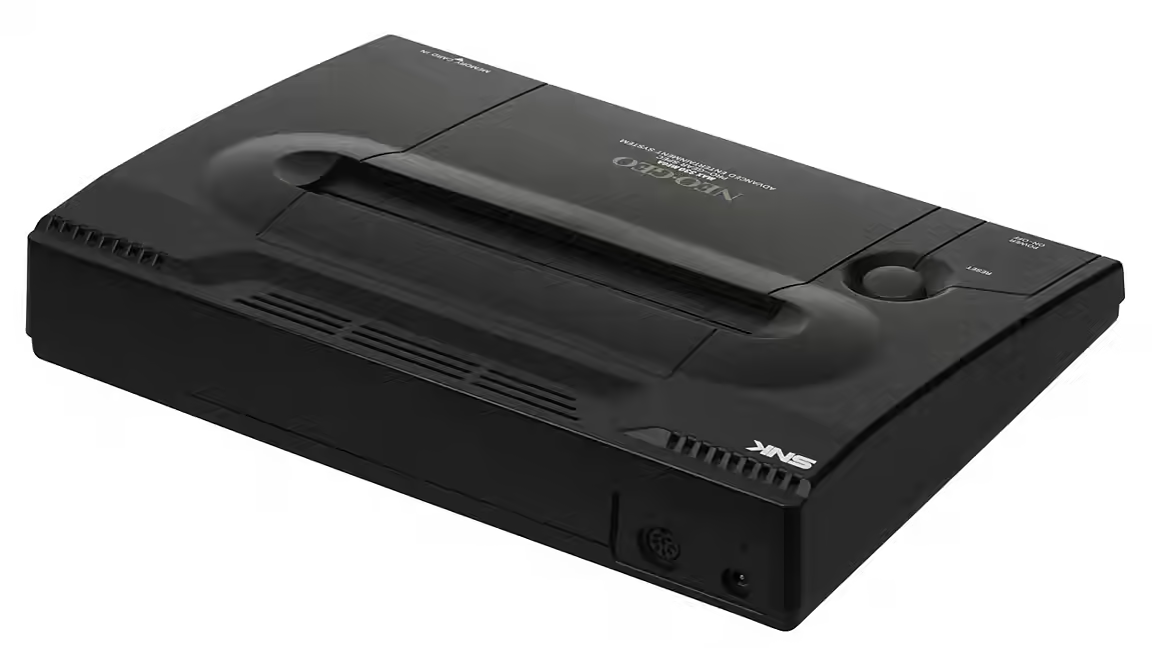
Alongside the numerical milestone, the organization is beginning formal support for Japanese-language magazines. Its pilot collection is the complete run of *Neo Geo Freak*, which covered Neo Geo home and arcade games between 1995 and 2000. A community member donated the physical run, while existing scans reduced the work needed to bring the publication online. The foundation says the title offers sustained coverage of platforms that had a particularly strong position in Japan and includes material rarely represented in English-language game media.
Preparing the Japanese collection required changes to both transcription and discovery. The foundation consulted archivists in Japan about optical character recognition, incorporated Japanese document-transcription libraries into its text-mapping system and asked researchers familiar with Japanese sources to assess the output. Japanese-fluent volunteers also created an English index of major articles and interviews across the run. That approach stops short of automatically translating roughly 10,000 pages, while giving English-speaking researchers a guide to the contents.
Platform updates for the pilot include language filters, right-to-left page presentation and search support for Japanese text without spaces between words. The foundation also reprocessed Japanese materials already in the archive, including FromSoftware promotional items, to use the revised system.
The project is seeking feedback before a much larger expansion. It says another 70,000 pages of Japanese material could be added over the coming years and is open to partnerships with organizations or collectors that hold stronger Japanese magazine collections. The pilot makes the 5,000-magazine mark both a measure of past growth and the starting point for a broader international archive.