Human biology in engineered systems
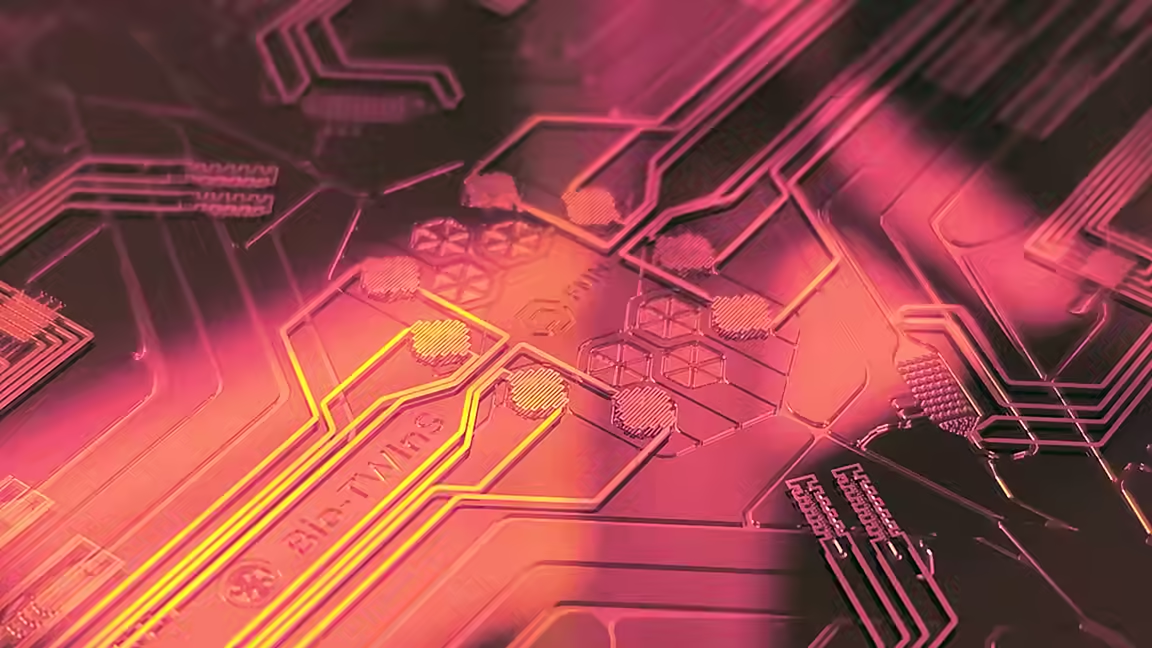
Technologies intended to reduce reliance on animal experiments are gaining a more prominent role in biomedical research and drug development. Among the leading approaches are organ-on-chip devices: small systems lined with human cells that recreate selected biological structures, movements and interactions more realistically than static cell cultures.
An early lung-on-chip developed by researchers at Harvard's Wyss Institute illustrates the concept. The clear polymer device placed cells from lung air sacs and blood vessels on opposite sides of a porous membrane. Vacuum channels stretched and relaxed the tissue to imitate breathing. In experiments, immune cells crossed the membrane in response to bacteria, reproducing an aspect of inflammation, while the mechanical motion affected how tissue responded to nanoparticles.
The system, first published in 2010 after comparison with mouse experiments, helped establish a field now commonly grouped under the term new approach methodologies, or NAMs. The category also encompasses other nonanimal or alternative methods. Companies including TissUse now build multi-organ chip systems for pharmaceutical research, and the technology is beginning to influence what evidence regulators request.
IEEE Spectrum reported an example in which a pharmaceutical company approached TissUse after the US Food and Drug Administration sought organ-on-chip or comparable alternative data rather than relying only on animal results. The account does not mean such requests are yet routine, but it indicates that alternative models can now be treated as decision-relevant evidence rather than merely experimental demonstrations.
Adoption is more than an engineering problem
The central barrier is no longer only whether engineers can construct a convincing model. Researchers must standardize devices, establish repeatable procedures and compare their predictions with both animal studies and human outcomes. Many NAMs still lack the extensive validation needed for broad use, and different organs, diseases and safety questions may require different combinations of methods.
Animal studies also remain embedded in regulation, training, laboratory infrastructure and organizational habits. Changing those systems requires new standards and confidence among researchers, companies and regulators. A technology can outperform an animal model in a particular task yet still face slow adoption if laboratories cannot reproduce the result or agencies do not agree on how the evidence should be interpreted.
The motivation for better models is substantial. Many drug candidates that appear promising before human testing ultimately fail because they are ineffective, unsafe or commercially unviable. That record does not by itself prove animal models caused the failures, but it underlines the need for tools that represent human biology more directly.
Organ-on-chip platforms will not replace every animal experiment immediately. Their progress instead points toward a mixed testing system in which engineered human tissues, computational methods and conventional studies are selected according to the question. The next phase depends as much on rigorous validation and institutional coordination as on more sophisticated chips.