# Malaysia ends Sarawak haze emergency as pollution eases but smoke remains
*Event date: 2026-09-07*
Malaysia has ended the haze emergency in Sarawak, but the pollution crisis that triggered it is far from over. The government said the emergency declared in Serian Division could be lifted after rain brought the Air Pollution Index down from critical levels, though several areas remained in the “very unhealthy” range.
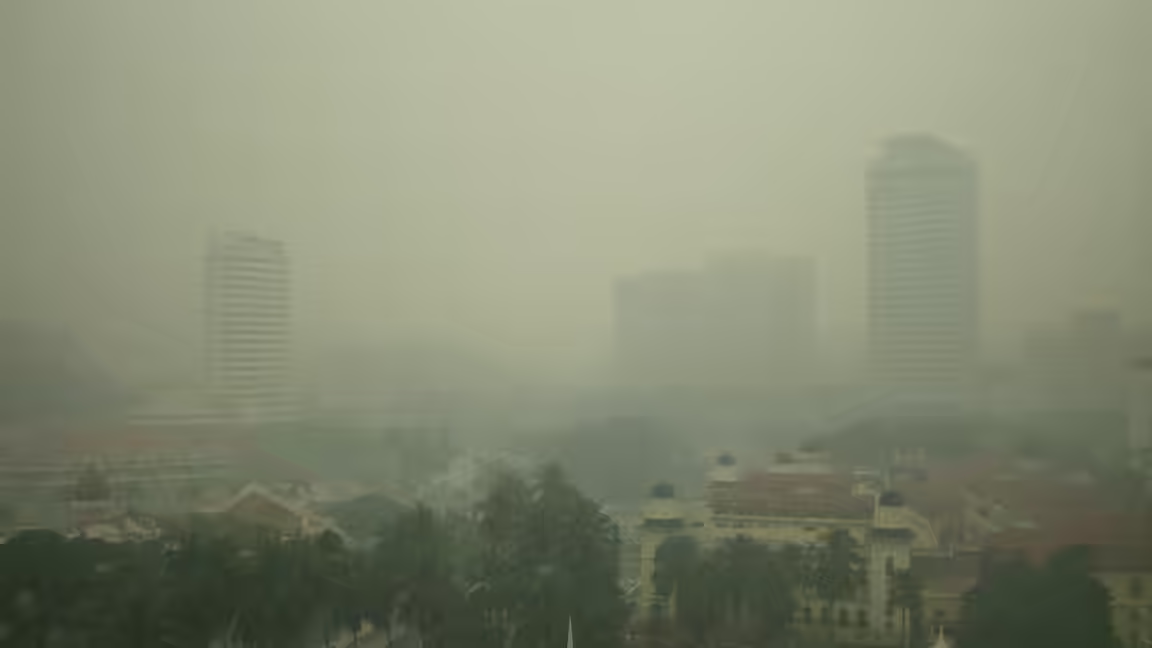
The emergency had been activated on Friday after API readings in Serian climbed above 500, peaking at 519 and leaving the town cloaked in smoke. Under Malaysian guidelines, an API reading above 300 is hazardous, while anything above 500 is the threshold for declaring a local emergency. By Monday, Sarawak’s Natural Resources and Environment Board said readings had fallen into the low 200s.
The prime minister’s office said King Sultan Ibrahim had approved the termination of the emergency declaration. Even so, the same statement warned that the haze situation in Sarawak had not fully recovered. That distinction matters because lifting the emergency is not the same as resolving the air-quality problem; it simply means the most acute legal response is no longer required.
Officials credited a spell of rain on Friday night and Saturday morning with easing the pollution, and the report says that rain was believed to have come from cloud seeding. Whatever the mechanism, the result was temporary relief rather than a return to normal. The haze still blanketed parts of the region and continued to affect daily life.
The pollution is part of a wider transboundary smoke event. Forest fires in neighbouring Indonesia have been sending haze across Borneo for weeks, affecting Malaysia as well as Singapore and Brunei. That means the crisis is not confined to one state and one emergency declaration; it is a regional environmental problem with political and public-health dimensions.
Sarawak’s case also shows how quickly local authorities can move between emergency and de-escalation when the weather changes. The outbreak of smoke became severe enough to justify the rare step of a royal-approved emergency, then fell enough to end it once rainfall pushed levels back down. But the fact that several areas still registered very unhealthy readings shows that the underlying smoke plume was still present.
For residents, the practical question is whether schools, outdoor work and travel can proceed safely while the atmosphere remains polluted. For officials, the harder question is whether the fires in Indonesia can be contained before another spike forces Sarawak back into emergency mode.
The government may have turned off the emergency switch, but the haze itself is still hanging over the region.