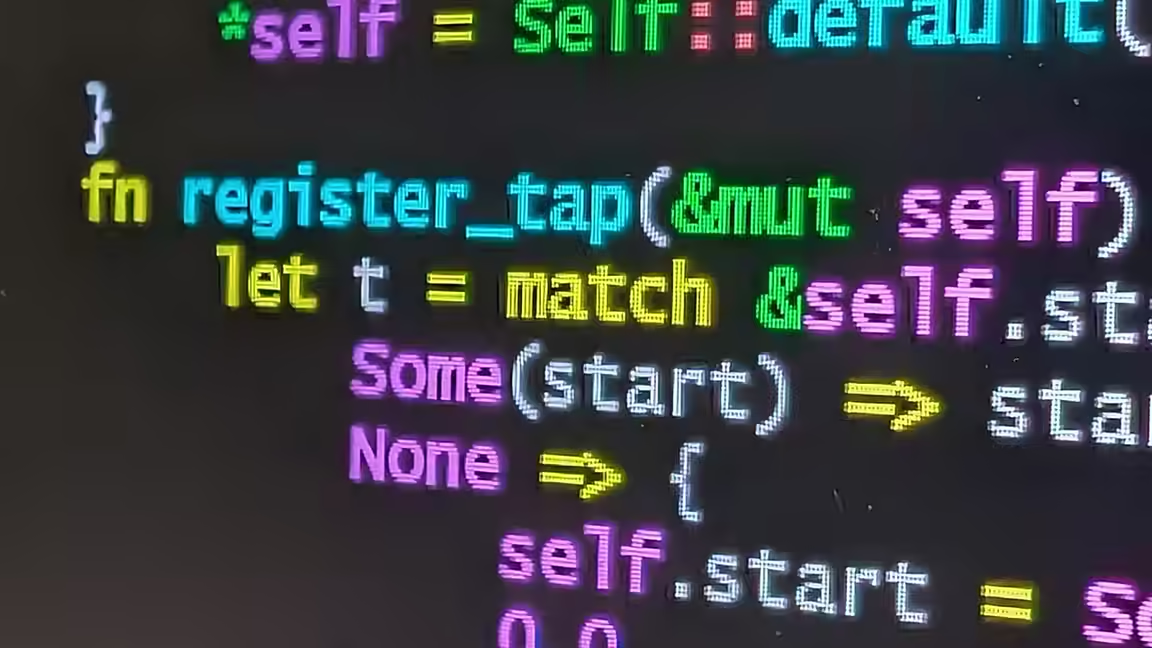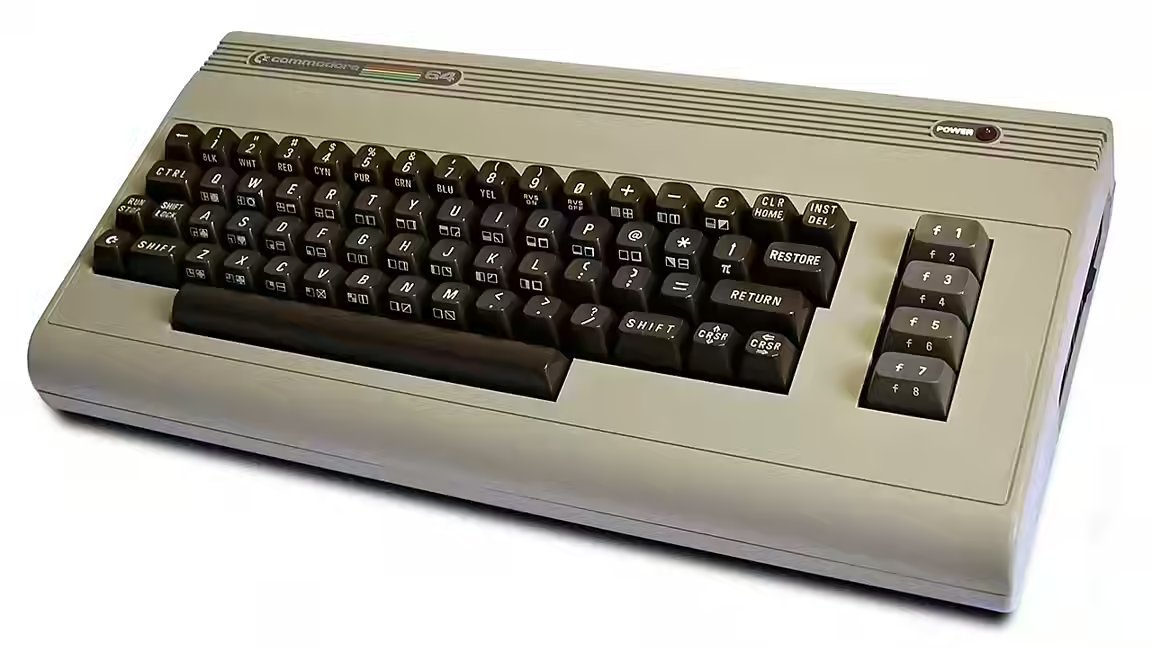
Code as a set of memories
A developer retrospective published on September 27 collects ten short pieces of code that shaped the author's relationship with computers. The selection is not presented as a ranking of technically important software. Instead, it treats small programs as markers of discovery: the first greeting printed by a machine, a useful personal shortcut, a debugging technique or a joke whose result only becomes clear when the code runs.
The tour spans several eras and levels of abstraction. An early “Hello world” example captures the moment a computer first followed an instruction. A machine-language routine for a 6502 processor demonstrates that executing code can modify its own bytes, including the addresses used by later instructions. For the author, that ability made low-level programming feel both powerful and dangerous because there were no higher-level guardrails between the program and memory.
Another entry is a tiny Windows batch script used as a makeshift version of the Unix `touch` command. It created empty files from a file manager's mini-shell and remained part of the author's workflow from Windows NT through Windows 7. Other examples move into web development, including a CSS debugging trick compared with familiar print-style diagnostics in other environments.
Playfulness and caution
Several selections show how experimentation can teach the structure beneath software. Changing a specific byte in a running game's memory could grant extra lives or resources, demonstrating that apparently fixed game rules were ultimately data that could be altered if their location was known. A school-era Pascal script scanned predictable three-letter usernames for accounts left with default passwords. The author describes it as crude and buggy, and as a youthful episode rather than a technique to repeat.
The retrospective also recalls the destructive command circulated as a supposed cure for Linux problems in old internet relay chat rooms. Its inclusion is a warning wrapped in period humor: privileged commands can erase a system, and copying unfamiliar advice can have irreversible consequences. At the other end of the spectrum, a compact animated poem made entirely from CSS shows how constraints can encourage creative compression. The animation was designed for the character limits of social platforms and could run in an otherwise empty document containing only a style block.
Taken together, the examples argue that code can matter without being large, novel or commercially significant. A single line may reveal that machines obey literally; a short routine may expose memory as mutable; a utility may remove daily friction. The common thread is not syntax but the moment each snippet changed what its author believed was possible.